24 French Ombré Nail Designs for 2026: Chic Ideas by Style
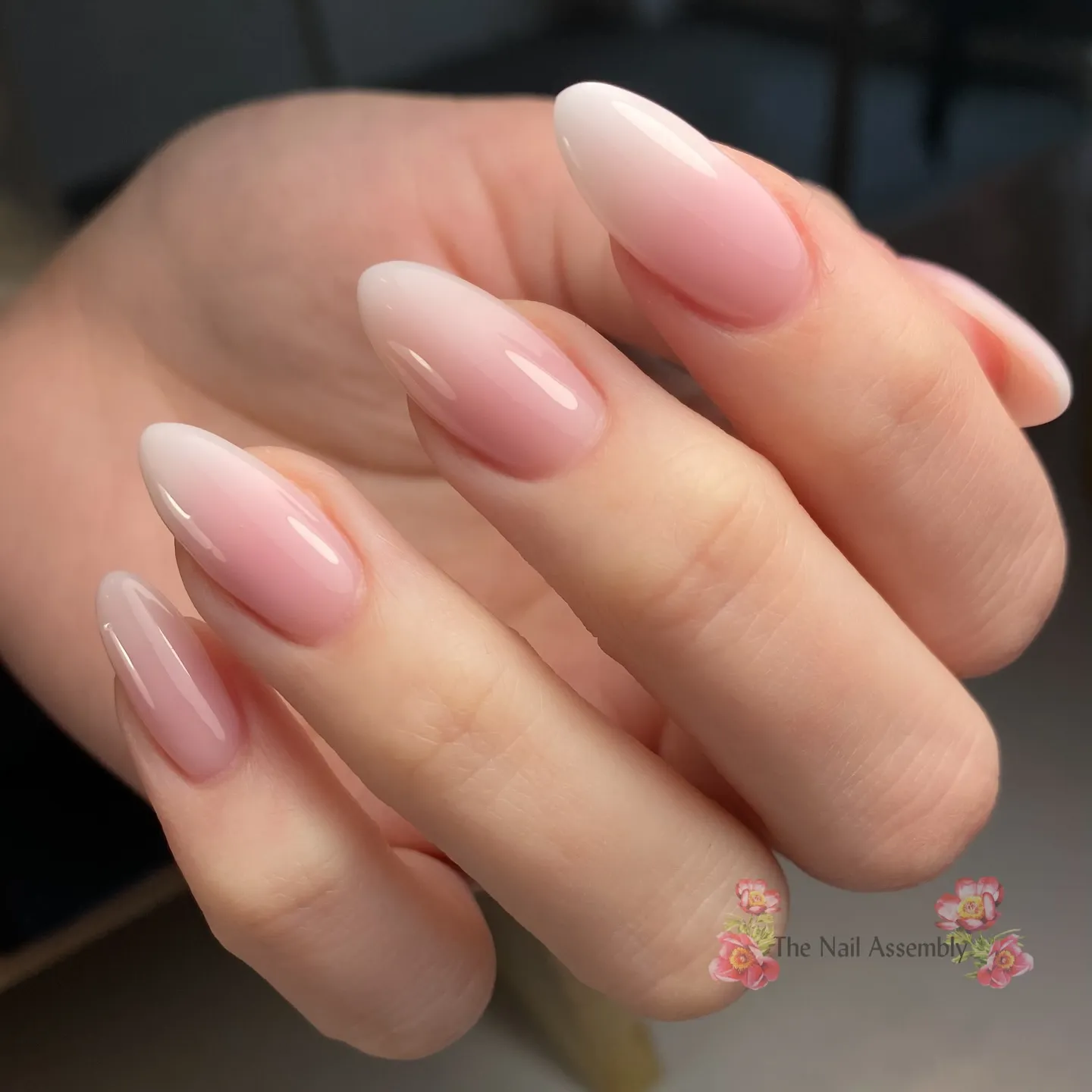
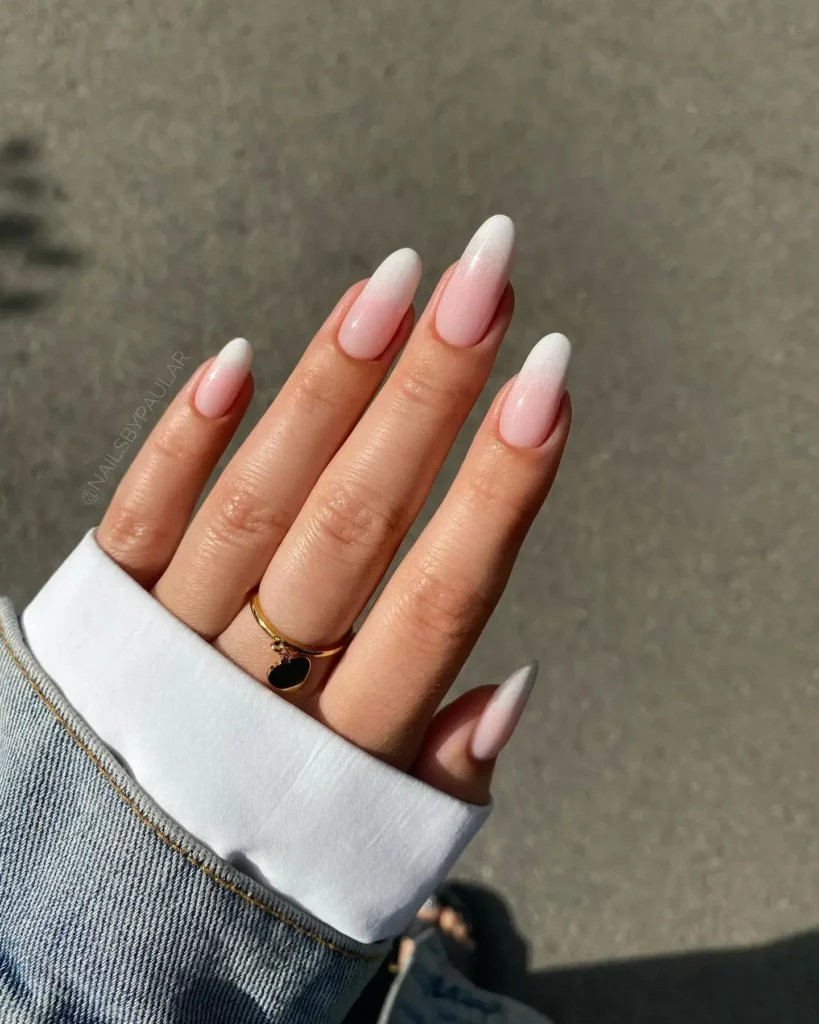
French ombré nails blend a classic French manicure into a soft, seamless gradient. Instead of a sharp white line at the tip, the color fades gradually from your nail bed into white, nude, or any shade you choose. Many people also call this style baby boomer nails or French fade.
This guide covers everything you need to know before your next appointment or DIY session. You will learn what French ombré nails actually are, why they remain popular in 2026, and which application method fits your skill level and budget. You will also find real troubleshooting tips for common mistakes, shape-specific advice, and 24 design ideas organized by style.
Whether you want a subtle everyday look or a bold statement manicure, this guide will help you choose the right approach and get it right the first time.
Why Is It Called “Baby Boomer Nails”?
The classic French manicure has a settled origin: Jeff Pink, founder of ORLY, created it in 1975 for actresses who needed nails that matched every outfit on set.
The “baby boomer” name is less certain, and even nail artists describe it differently. Nail artist Jade Tang told Refinery29 that the style evolved from the classic French manicure and traces back to the 1940s, the baby boomer generation’s era, calling it “a timeless and elegant look.” Other sources instead tie the name to the 1980s, when pale pink and frosted white shades became salon staples. Some technicians use “American manicure” as an alternate name entirely. No single source settles which explanation is correct.
One data point does confirm the style’s staying power internationally. Pinterest’s 2018 Global Beauty Report found that saves for this exact ombré French design rose 100 percent, with particularly strong interest in France and Germany.
What matters more: baby boomer nails and French ombré nails are the same manicure. Ask for either name, and you should get the same result.
Ombré French vs. Invisible French vs. Classic French
| Feature | Classic French | Invisible French | Ombré French |
| Tip line | Sharp, defined | Soft, still visible | No visible edge |
| Contrast | High | Low to medium | Low |
| Regrowth visibility | Noticeable in 10 to 14 days | Less noticeable | Least noticeable |
The confusion is usually between invisible and ombré French. Invisible French still has a defined tip, just in a paler shade. Ombré French has no tip line at all. The color melts from one shade into the next.
Are French Ombré Nails Still in Style in 2026?
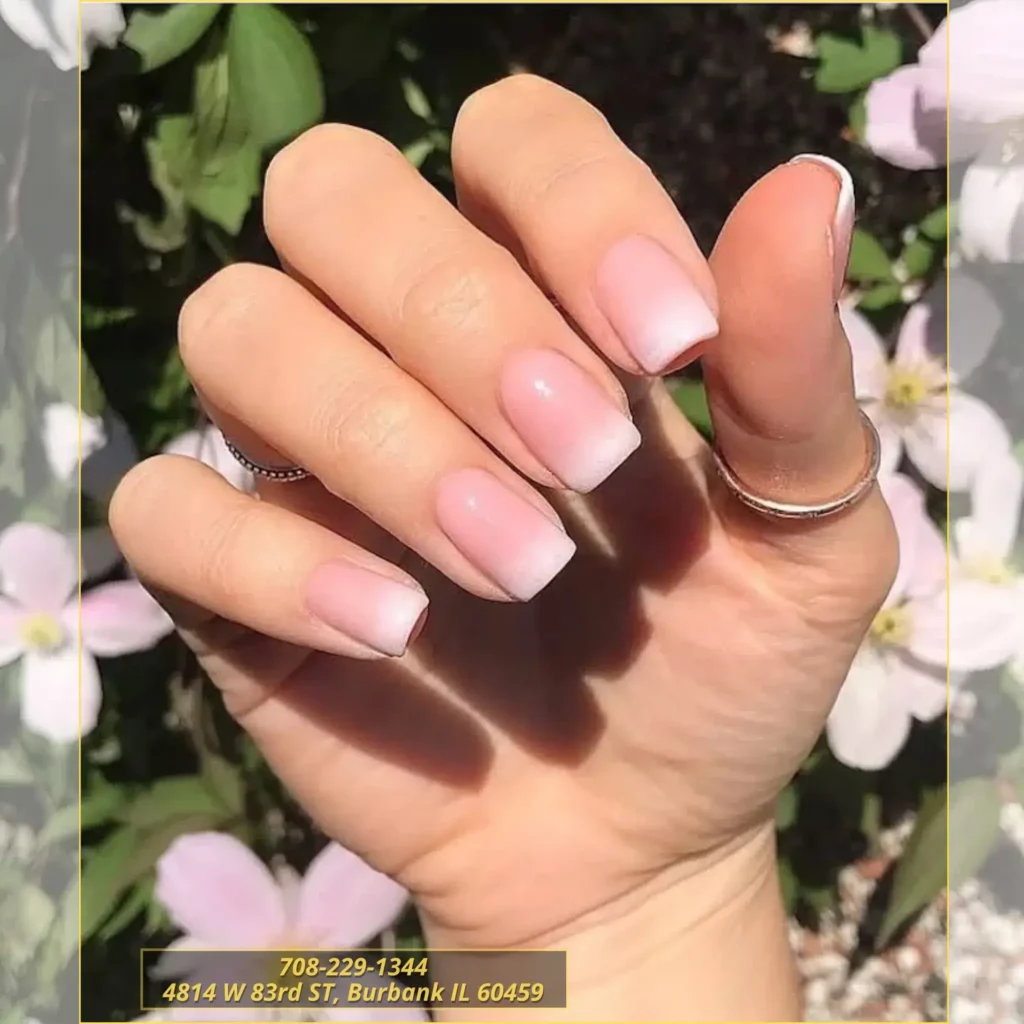
Yes. French ombré nails are not a passing trend. Google searches for “ombré French nails” spiked 7,700 percent in 2022, and the style has stayed relevant since, evolving each year rather than fading out. In 2026, the look has shifted toward hazier tips, watercolor-style gradients, and aura-inspired blends, moving away from the higher-contrast fades that were popular a few years ago.
This staying power comes down to versatility. The gradient works on any nail length or shape, and it adapts easily to seasonal colors without losing its core appeal.
Why It’s Outlasting the Classic Hard-Line French Tip
A sharp French tip shows regrowth fast. Once your nail grows out, the white line visibly shifts away from the tip within 10 to 14 days, making the manicure look unfinished.
Susan Carroll (Sue Carroll), founder of Young LDN, explains why the ombré version avoids this problem: “Regrowth is less obvious than with a traditional French manicure, so they tend to stay looking salon-fresh for longer.” Because the color fades gradually instead of stopping at a hard line, new growth blends into the gradient instead of standing out against it.
This is a practical reason people keep choosing French ombré over the classic style, not just an aesthetic one. It stretches the time between salon visits without looking overdue for a fresh set.
24 French Ombré Nail Ideas by Style
These 24 designs are organized into six categories, from the classic milky look to bold, colorful fades. Each category groups similar color palettes and finishes together, so you can jump straight to the style that fits what you’re looking for.
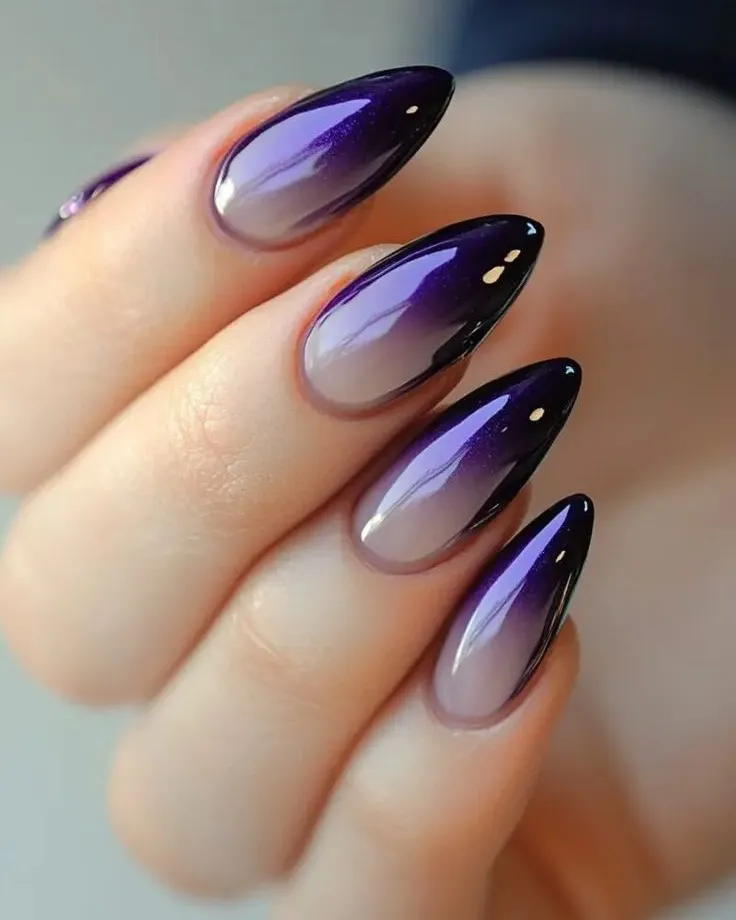
Classic Milky French Ombré Nails
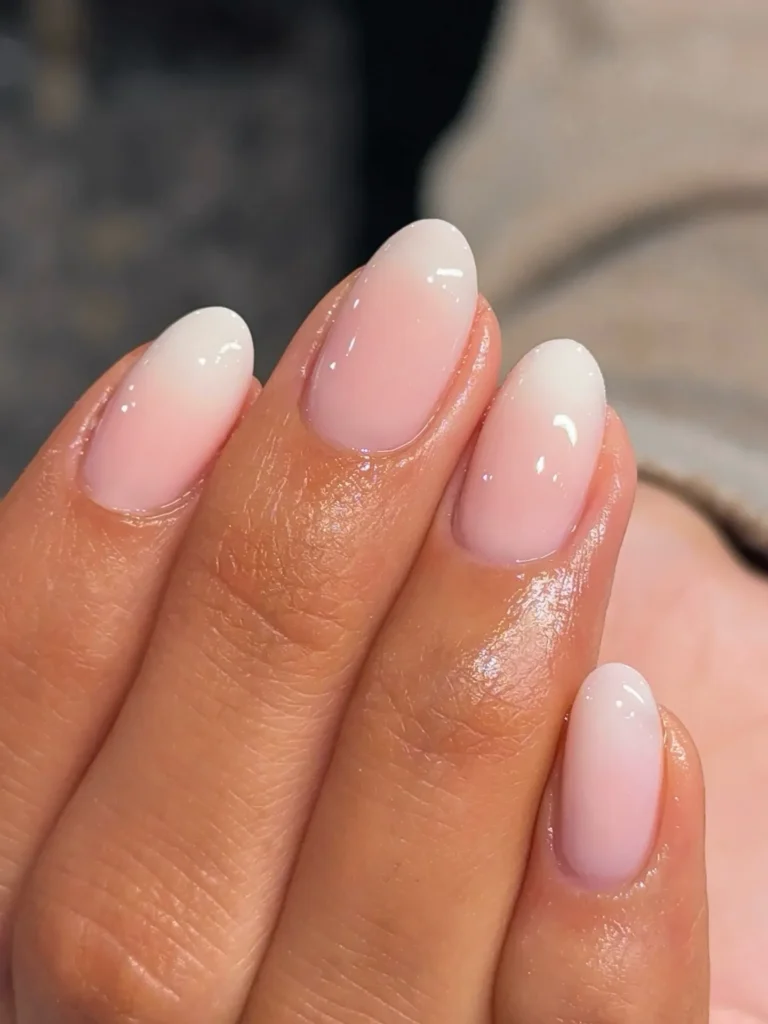
This is the most requested version of the style, and the closest to the original baby boomer look. A sheer pink or nude base fades into a soft, milky white, with no harsh contrast anywhere on the nail.
1. Classic Pink-to-White Ombré
The standard version of the look. A light pink base blends into a crisp white tip, with the transition centered around the midpoint of the nail. Works well on almost any length or shape, which is why it remains the default choice most people ask for. If you want more variations on the pink base itself, browse these pink French tip nail designs.
2. Sheer Nude to Ivory Fade
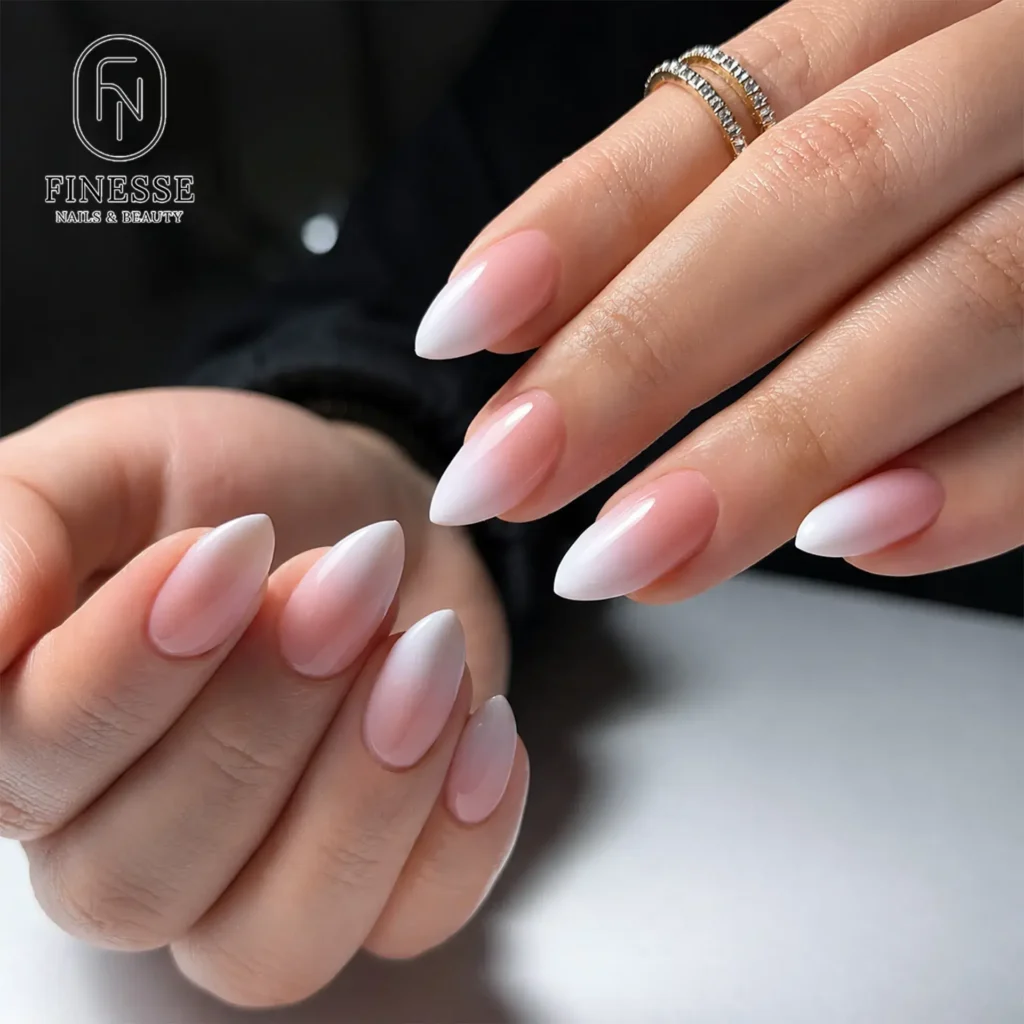
A slightly warmer take that swaps stark white for an off-white or ivory shade. The lower contrast makes this version especially subtle, closer to invisible French than a typical ombré, and a good option if you want something office-appropriate.
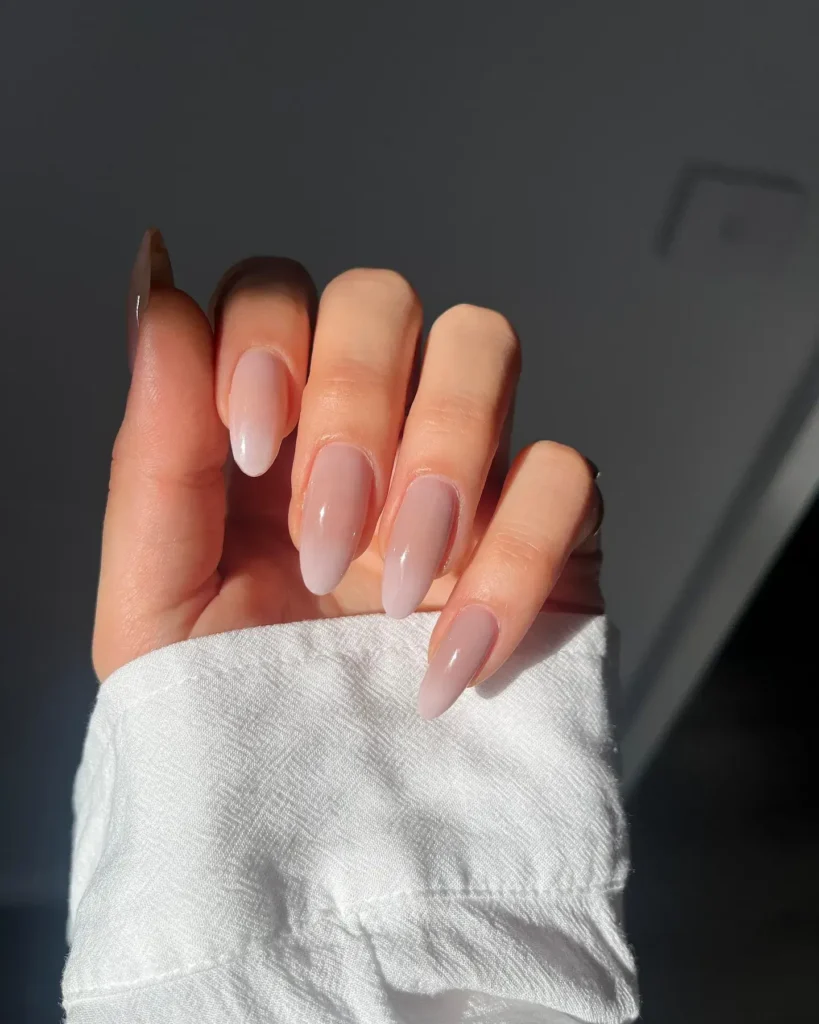
3. Short and Natural Milky Ombré
Built for shorter nails, where the white is kept close to the free edge and applied at a lower opacity. This avoids the stunted look that comes from pushing a heavy white too far down a short nail bed.
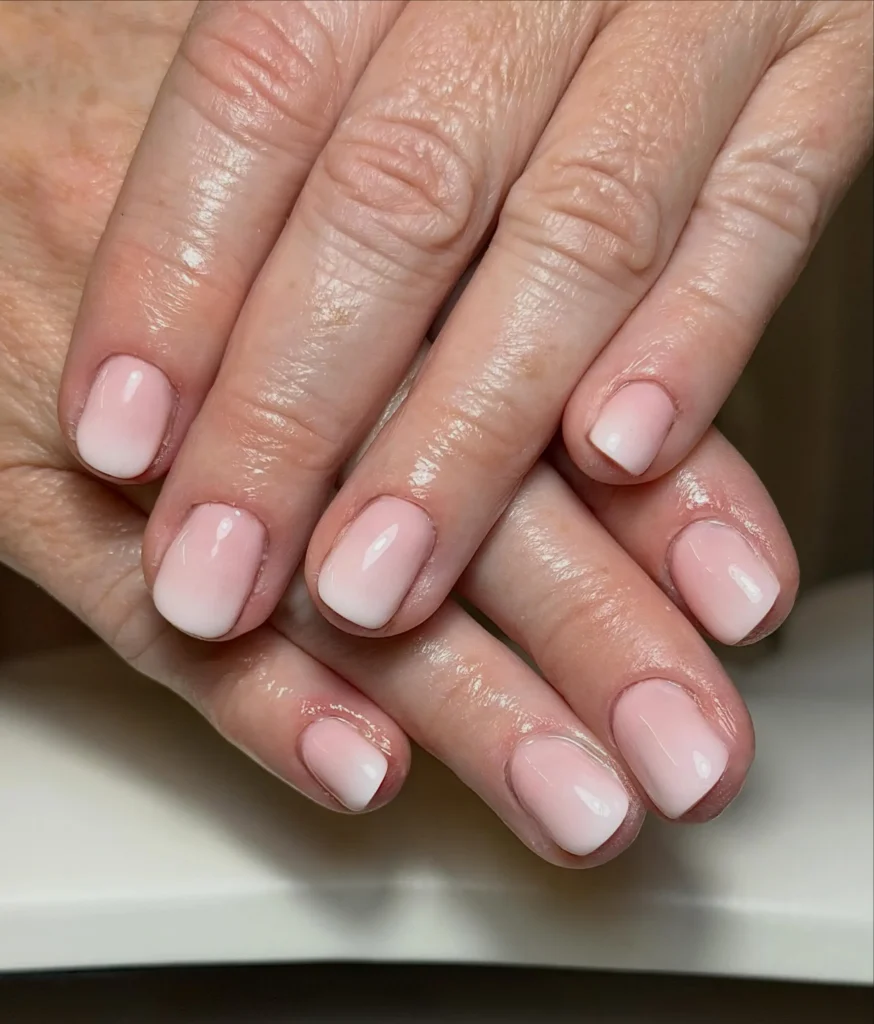
4. Almond Milky French Ombré
The tapered shape gives this version more room to work with, letting the white extend higher up the nail without looking blocky. The elongating effect of the almond shape pairs naturally with the gradient itself.
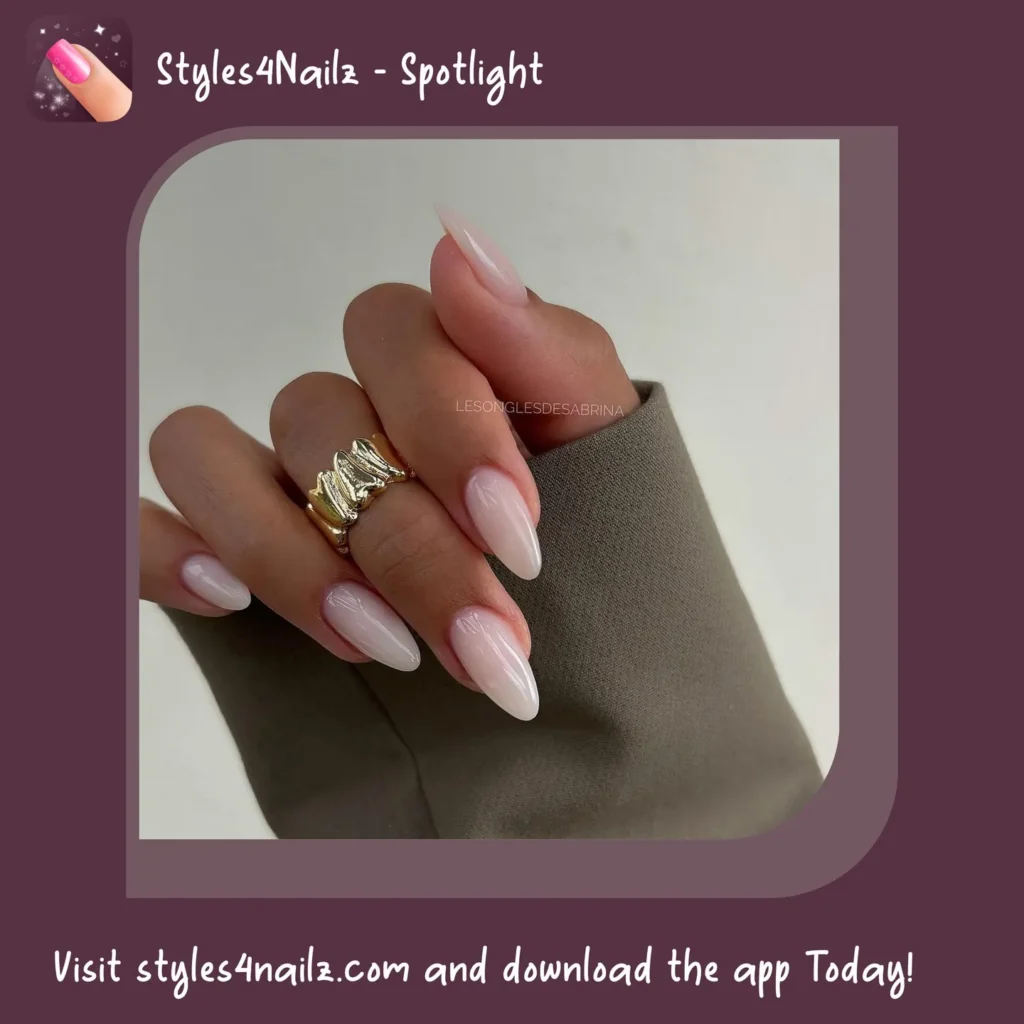
Glazed and Chrome French Ombré Nails
This category layers a reflective chrome or pearl finish over the classic gradient, giving the manicure a glossy, almost wet-look shine. It’s a 2026 update on the milky French ombré rather than a departure from it.
5. Glazed Chrome French Tips
A soft pink-to-white base finished with a sheer chrome powder buffed over the entire nail. The gradient stays visible underneath, but the glazed top coat adds a reflective sheen that changes how the color looks depending on the light.
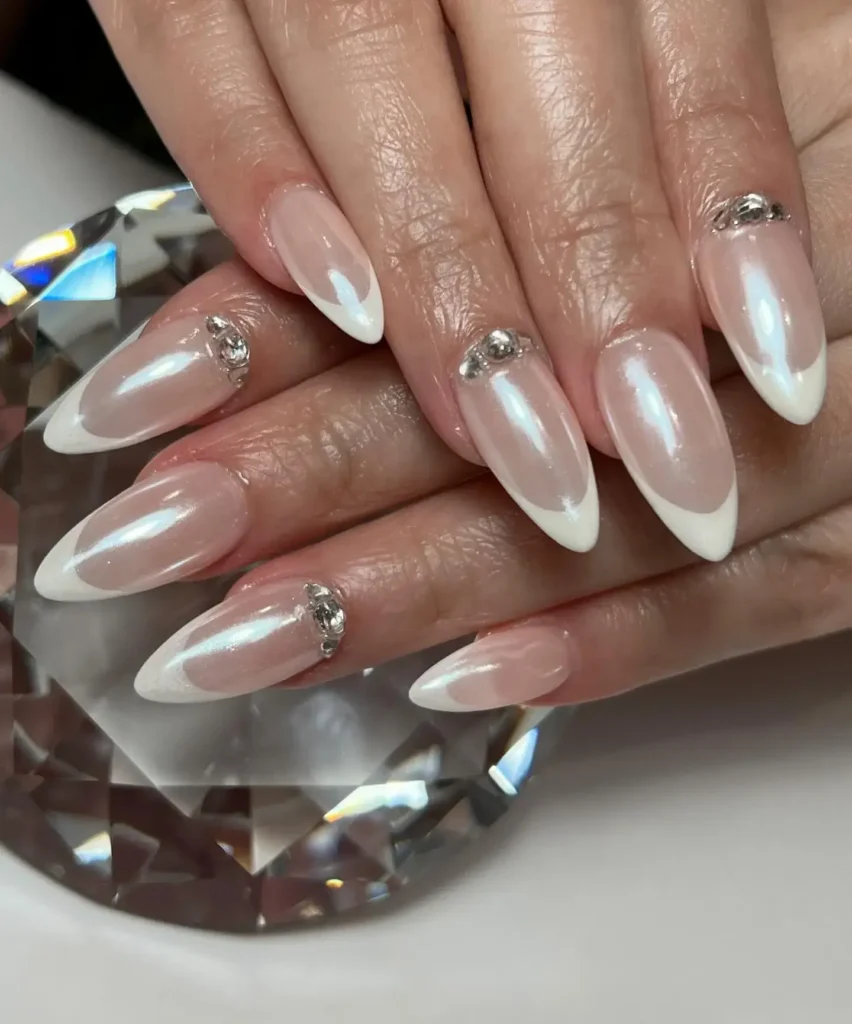
6. Silver Chrome Reverse Ombré
Instead of fading toward the tip, the chrome concentrates near the cuticle and fades outward. This reverses the usual direction of the gradient and gives the manicure a more modern, less traditional feel.
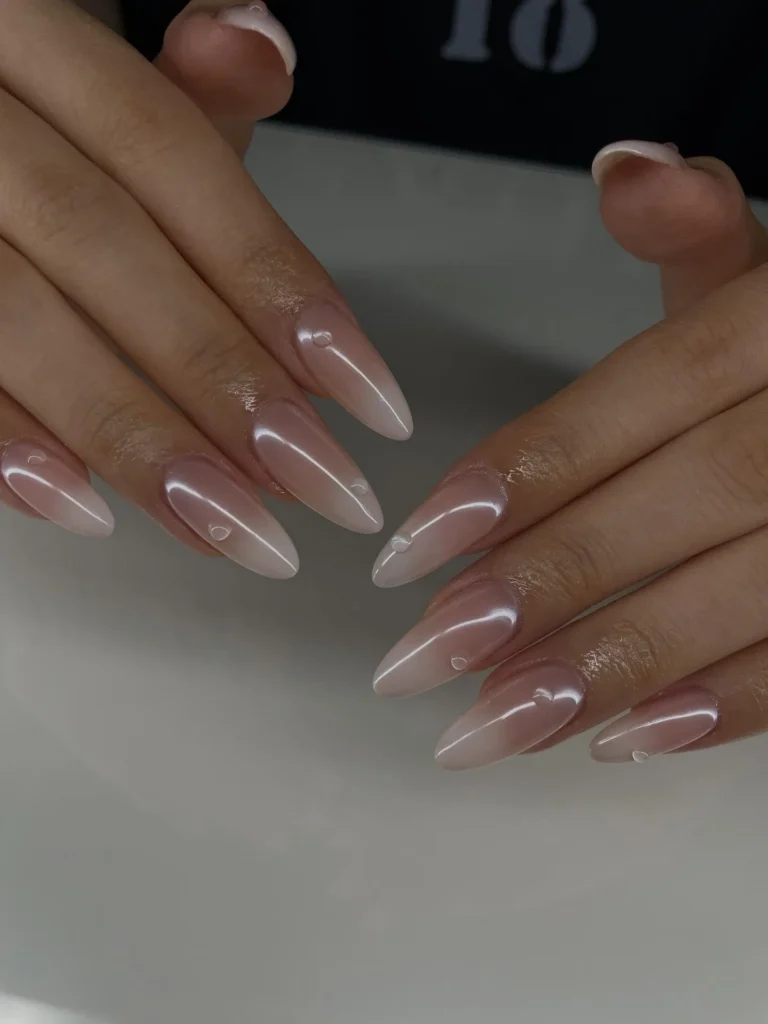
7. Gold Chrome French Fade
A warmer alternative to silver chrome, applied the same way over a nude or pink base. Works particularly well as a bridal or special occasion option, since the gold tone reads as more formal than a plain milky finish.
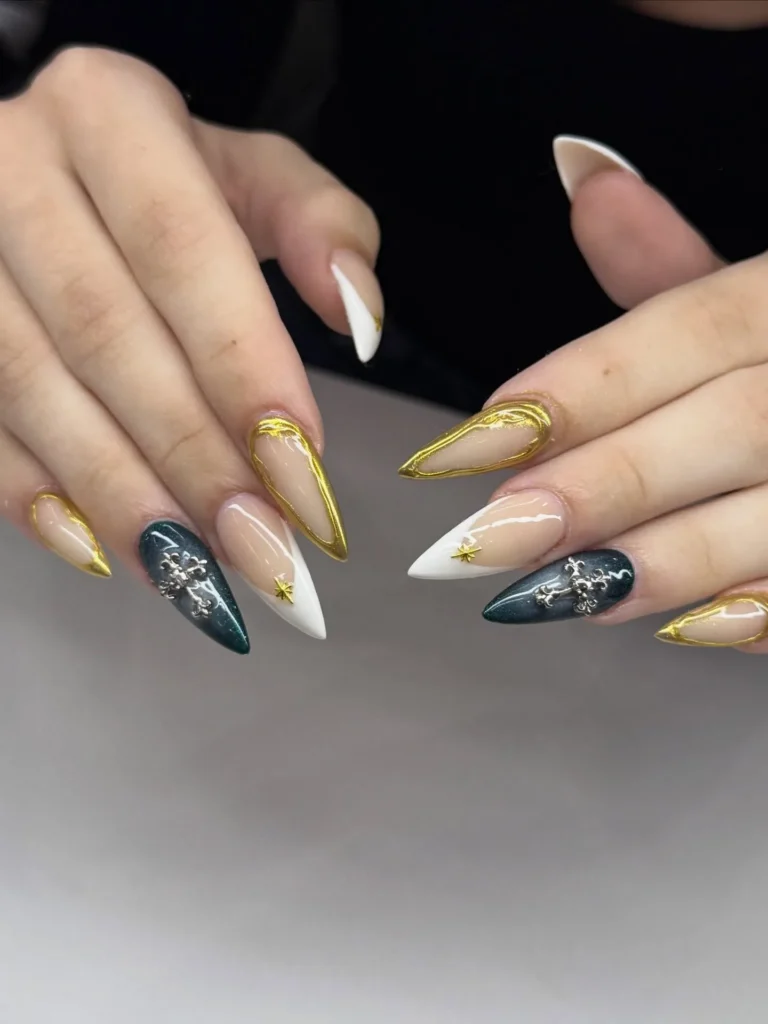
8. Iridescent Pearl Ombré
Uses a pearlescent powder rather than a true metallic chrome, giving a softer, color-shifting shimmer instead of a mirror finish. This version tends to suit everyday wear better than the higher-shine chrome options, since the effect is more subtle in natural light.
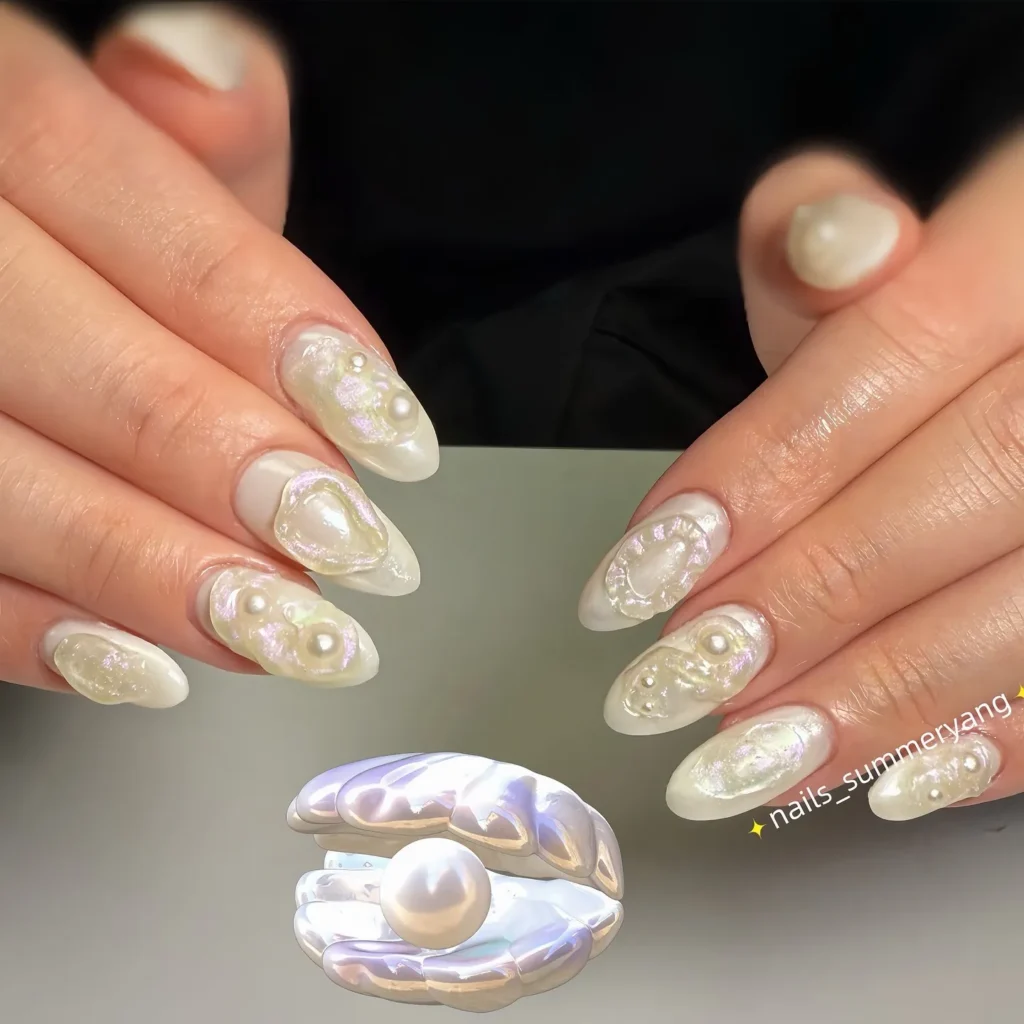
Colored and Pastel French Ombré Nails
Swapping white for a soft color changes the entire feel of the manicure without changing the technique. The same fade, applied with pastel pigment instead of white, moves the look further from “French” and closer to a color-first design.
9. Lavender French Ombré
A pale lilac tip fading into a sheer nude or white base. The soft purple tone keeps the look feminine without leaning into a full color manicure, making it an easy way to add color without much commitment.
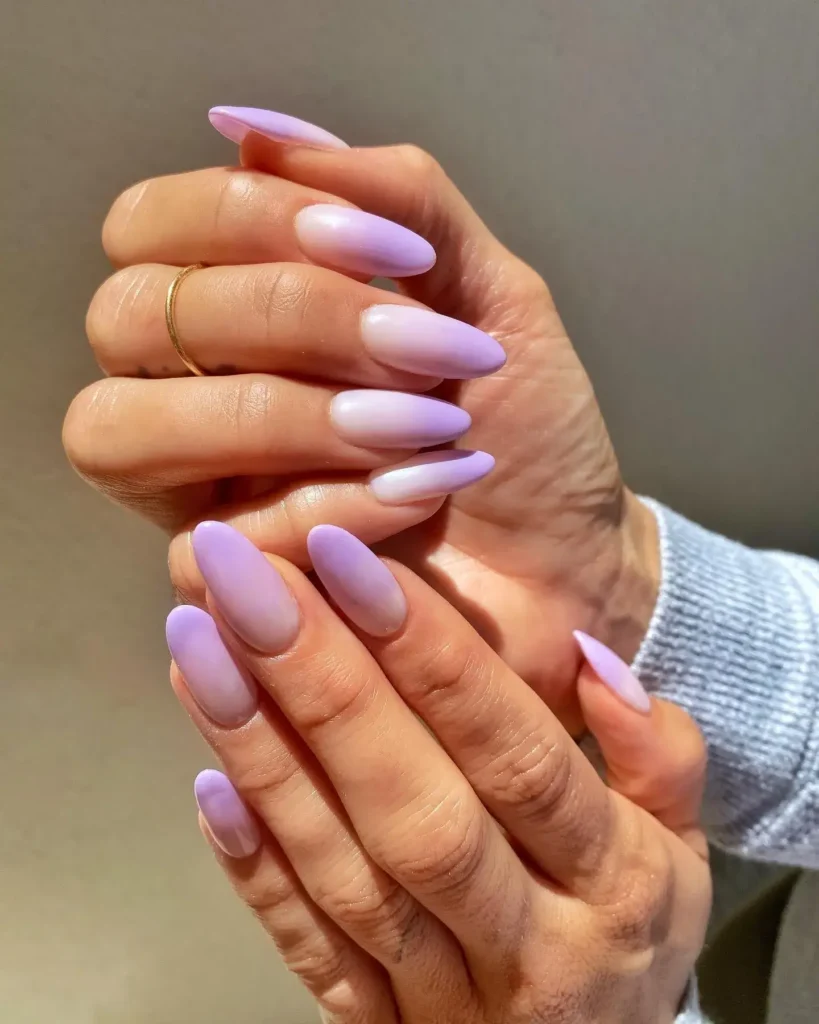
10. Peach and Nude Fade
A warm peach tone blended into a nude base, sitting somewhere between a classic milky ombré and a full color look. Works well for spring and summer, since the warmth suits tanned or deeper skin tones especially well.
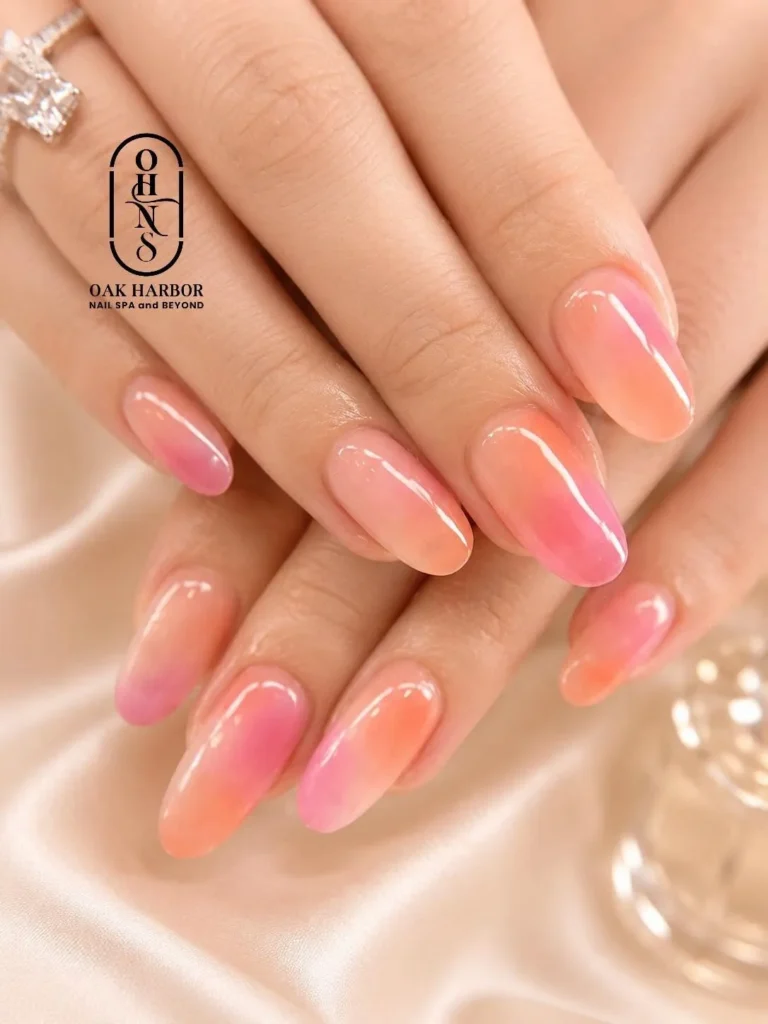
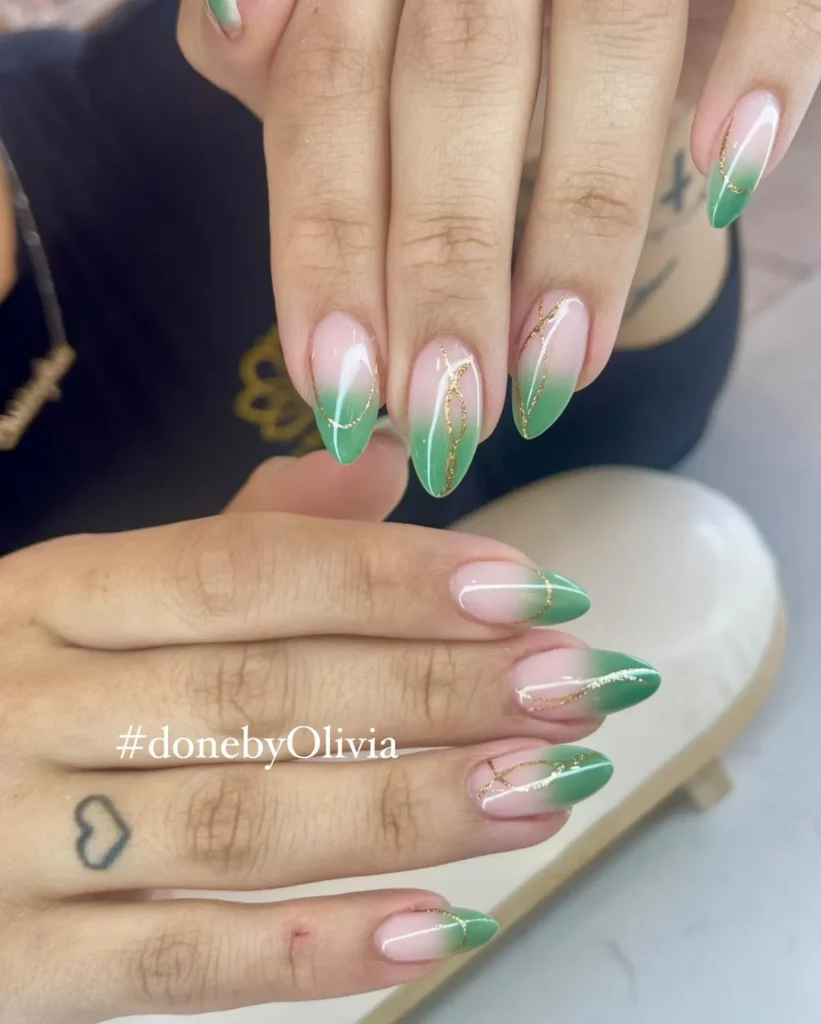
11. Sage Green French Tips
A muted, dusty green in place of white. This shade reads as more neutral than a typical bright green, which is why it works as a French ombré tip rather than a full nail color.
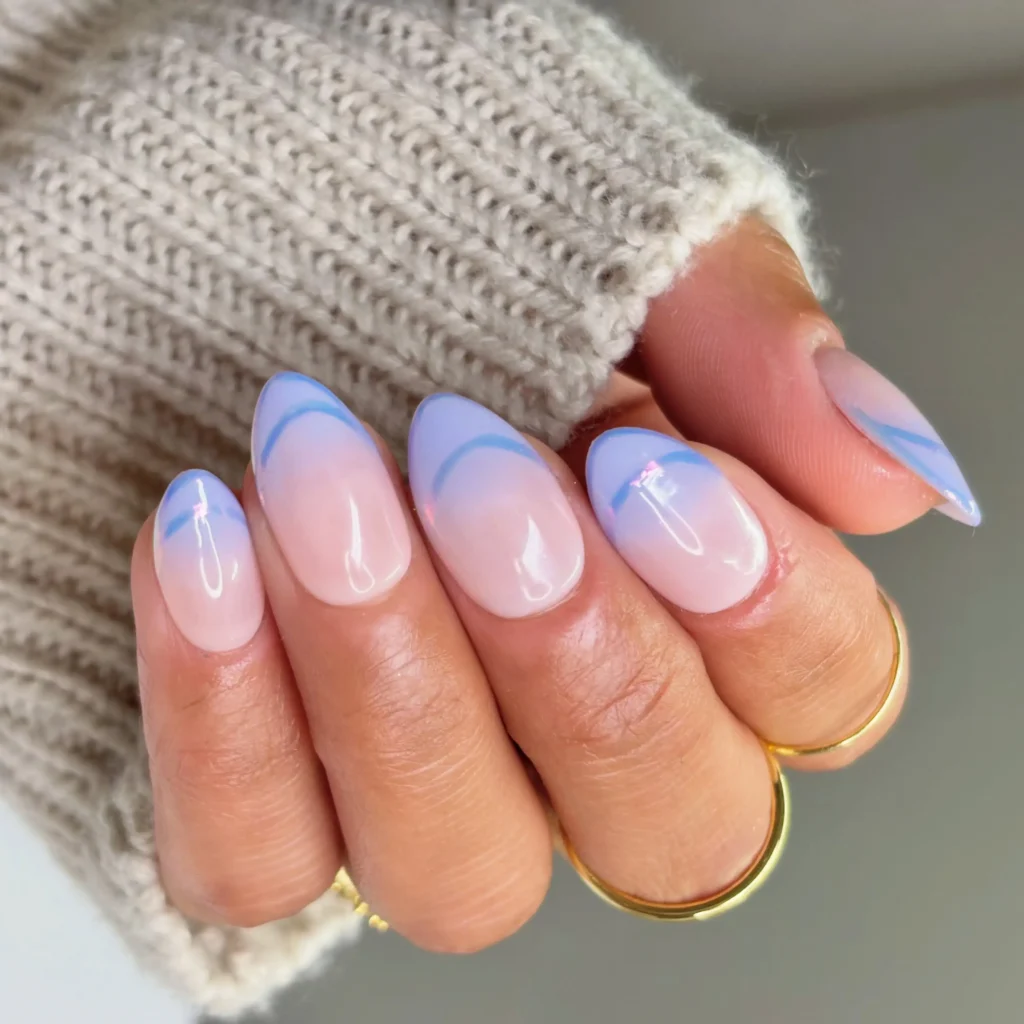
12. Baby Blue Ombré Fade
A soft pastel blue fading into a white or nude base. A common choice for bridal looks when someone wants a “something blue” detail without a full blue manicure.
Glitter and Shimmer French Ombré Nails
Sparkle builds gradually here instead of covering the whole nail, so the gradient still reads as a French ombré rather than a full glitter manicure. The glitter concentrates at the tip and fades out, the same way a color would.
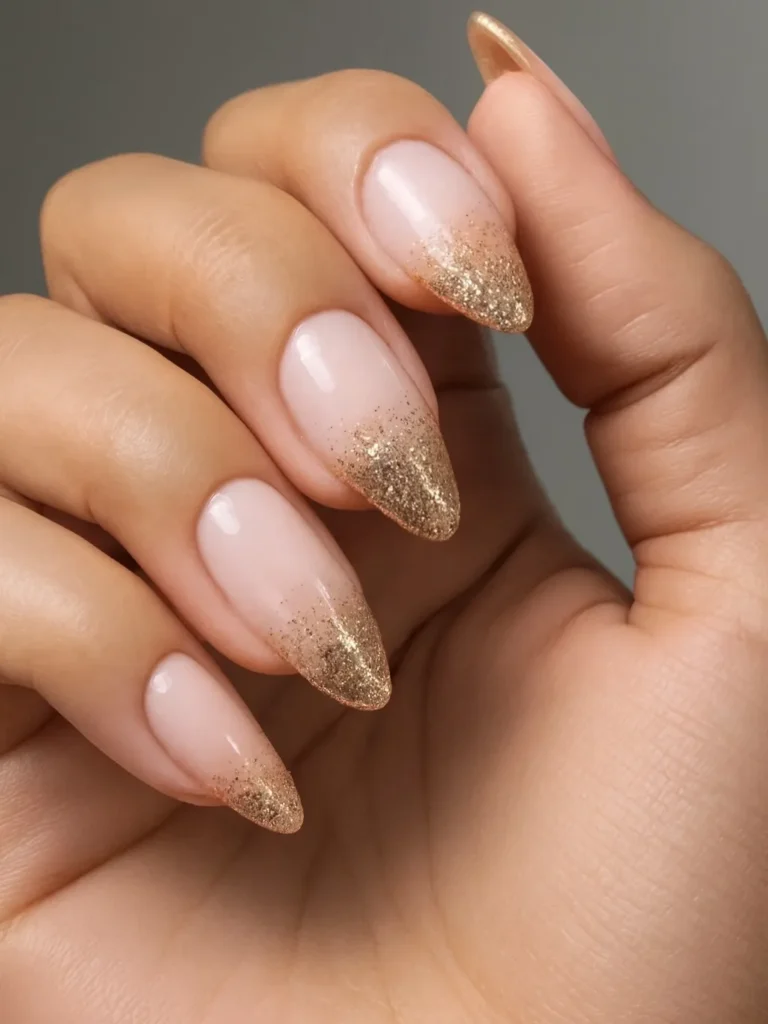
13. Gold Glitter Tips
Fine gold glitter tapped onto the tip over a nude or pink base, fading out toward the cuticle. Reads as festive without looking heavy, since the glitter stays contained to where the white would normally sit.
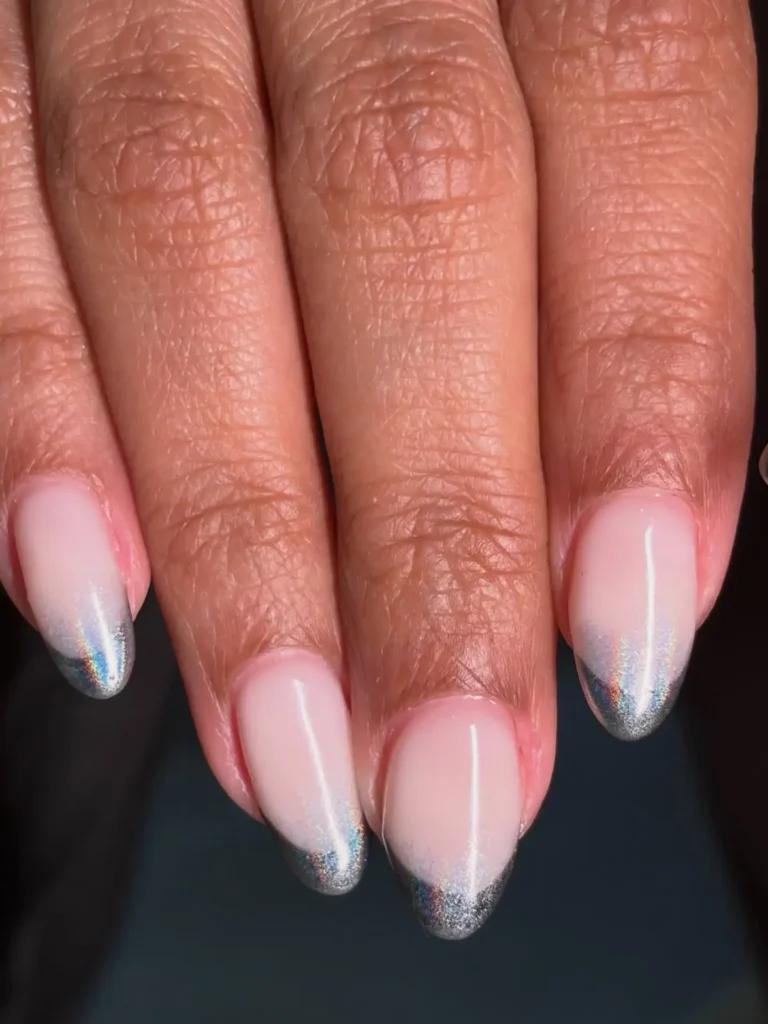
14. Holographic Silver Ombré
A holographic silver polish gives a more subtle shimmer than chunky glitter, shifting color slightly depending on the light. Works well for events or the holiday season, when a plain milky ombré might feel too understated.
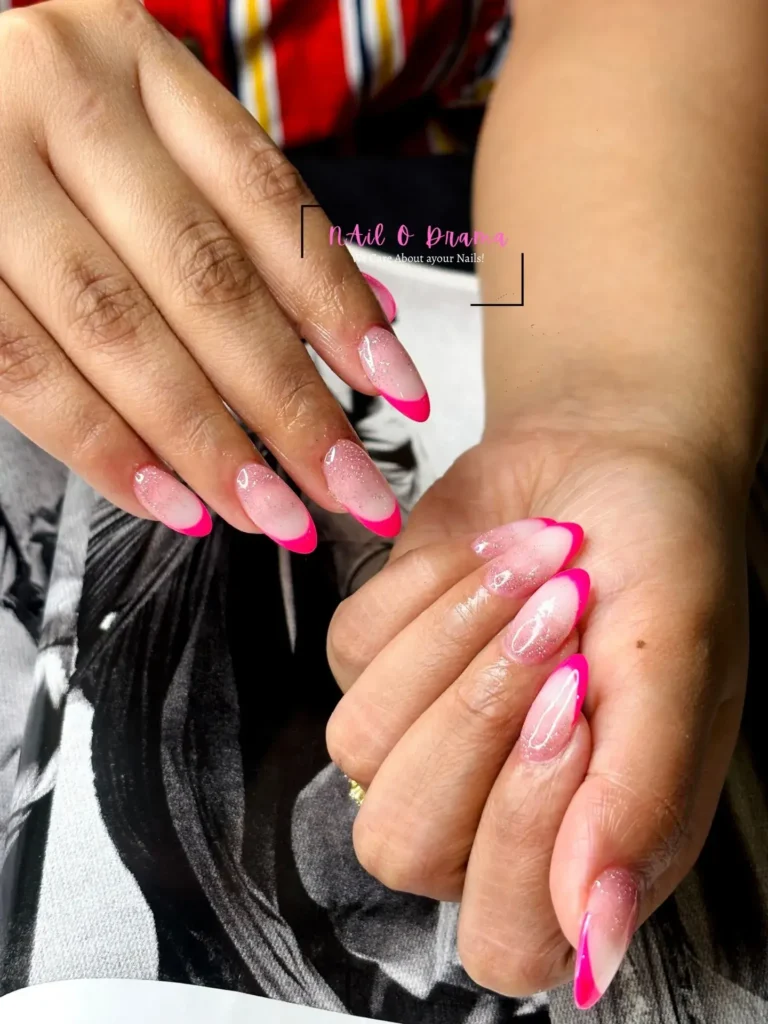
15. Pink Glitter Fade
A sheer pink base fading into a shimmery pink glitter tip, keeping the whole look within one color family. This tends to suit almond shapes especially well, since the glitter catches light along the tapered edge.
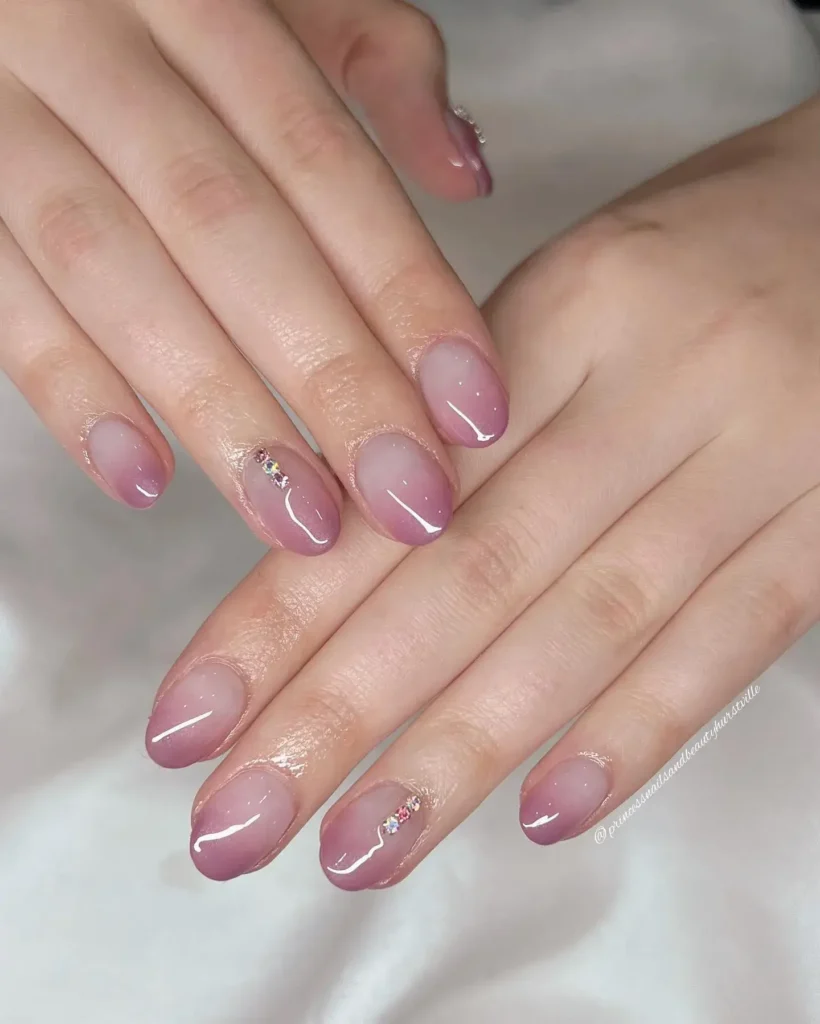
16. Shimmery Mauve Ombré
A cooler, dustier pink than the typical bubblegum shade, finished with a light shimmer rather than visible glitter particles. Reads as more grown-up than brighter glitter options, closer to a neutral manicure with extra dimension.
Bridal and Wedding French Ombré Nails
French ombré grows out more evenly than a classic hard-line French tip, which matters for brides booking their manicure days or even weeks before the wedding. These four options build on that practical advantage with finishes suited to photos and long wear.
17. Classic Bridal Milky Ombré
The same pink-to-white gradient as the everyday version, just finished with a higher-gloss top coat. This tends to be the safest choice for brides who want their nails to photograph well without drawing attention away from the dress or rings.
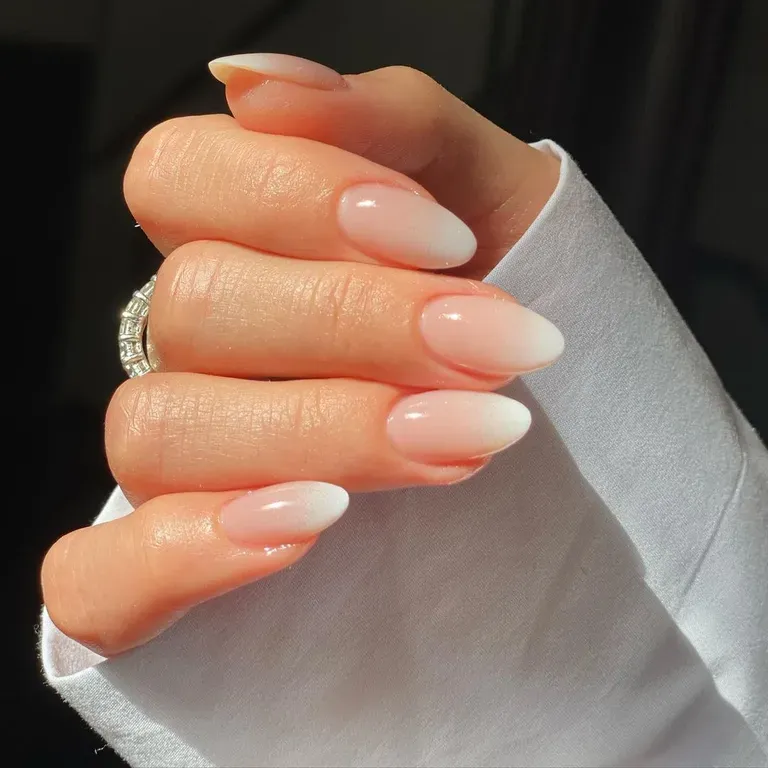
18. Pearl-Accented Bridal Fade
A milky base finished with a pearlescent powder that catches light without full chrome shine. Reads as more formal than a plain milky ombré, while staying subtle enough to pair with most wedding styles.
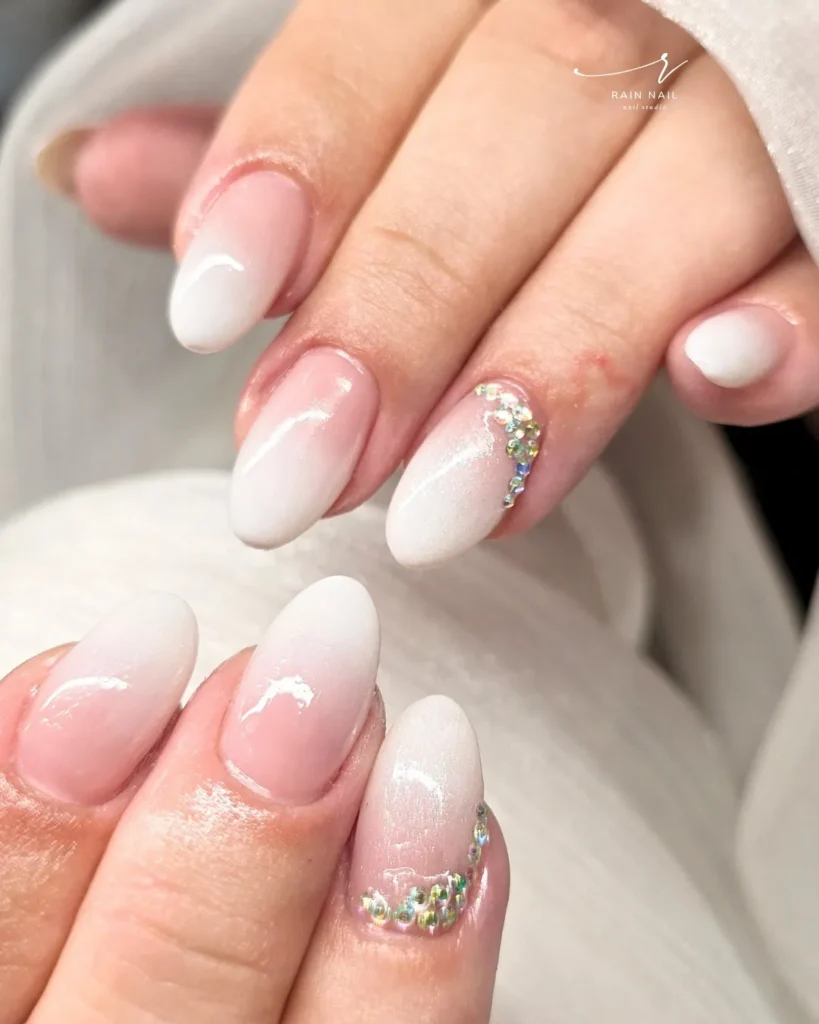
19. Floral Bridal French Ombré
A milky or nude base with a small hand-painted or 3D floral accent on one or two nails, usually the ring fingers. Lets the manicure feel bridal-specific without covering every nail in decoration.
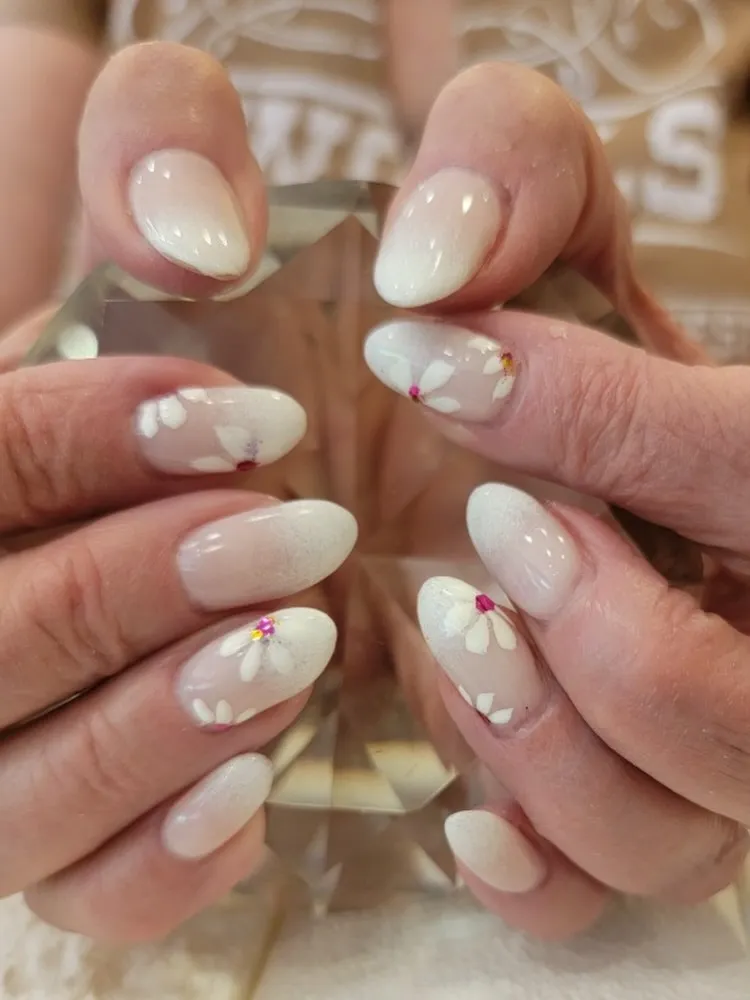
20. Something Blue Ombré
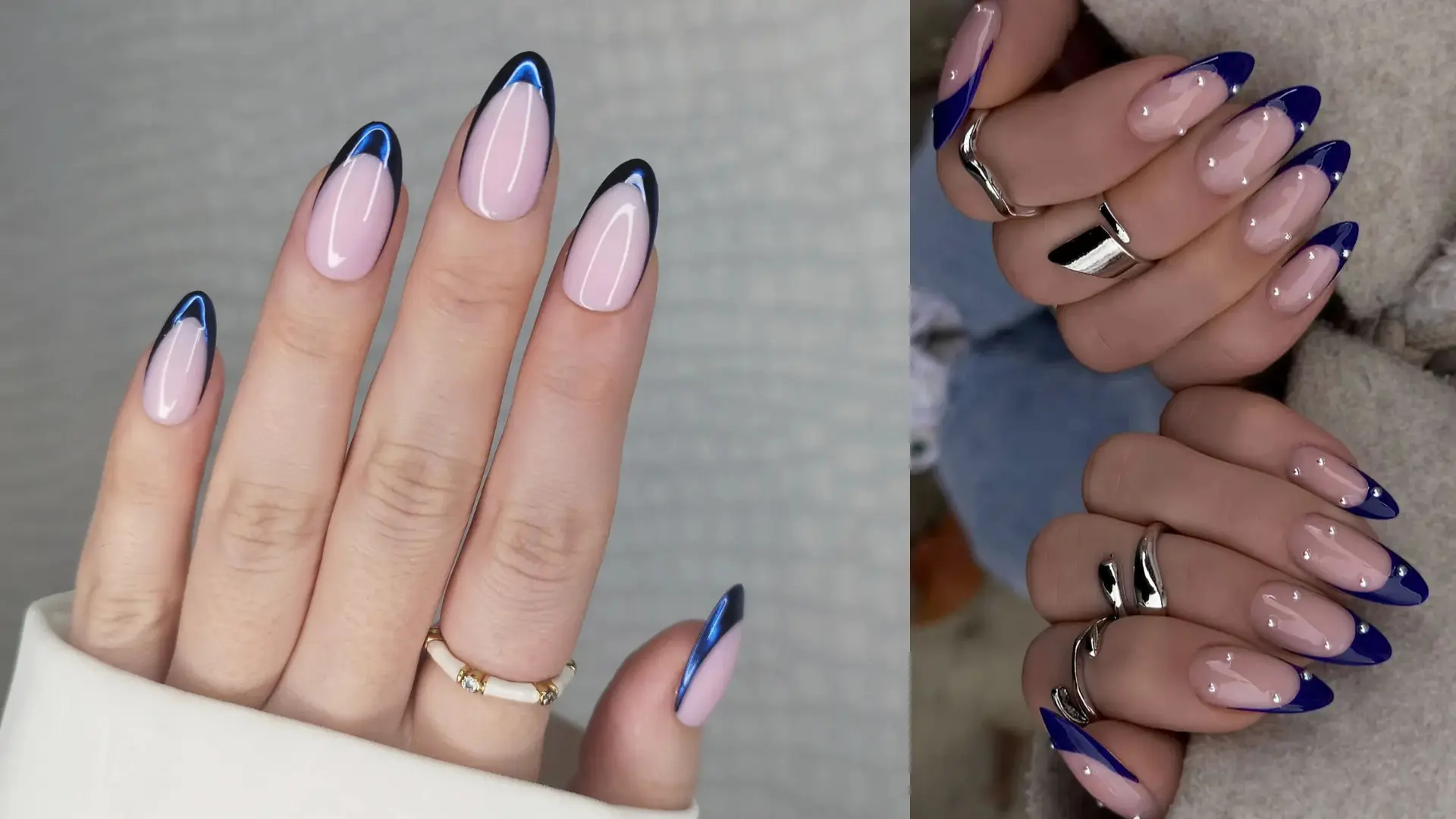
A pale blue tip fading into a white or nude base, a literal nod to the “something blue” tradition. Works well for brides who want a personal detail in their nails without a full color manicure. For non-bridal takes on this shade, see these blue French tip nails.
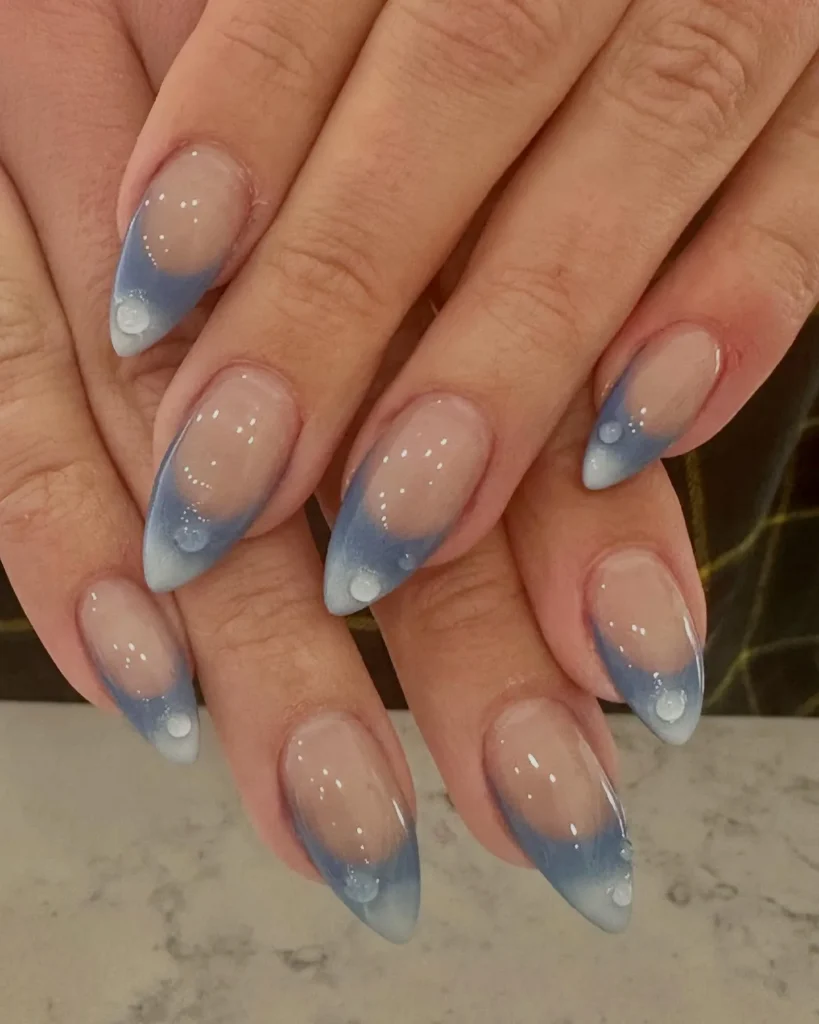
Bold and Colorful French Ombré Nails
Not every French ombré needs to stay soft. These four options trade the milky, muted palette for saturated color, while keeping the same gradient technique that defines the style. If red is more your speed, check out these red French tip nail designs for inspiration outside the ombré blend.
21. Hot Pink to White Fade
A crisp white base fading into a bright hot pink tip, reversing the usual soft-to-bold direction of most ombré designs. The high contrast makes this a statement option, better suited to shorter nails where the color doesn’t overwhelm.
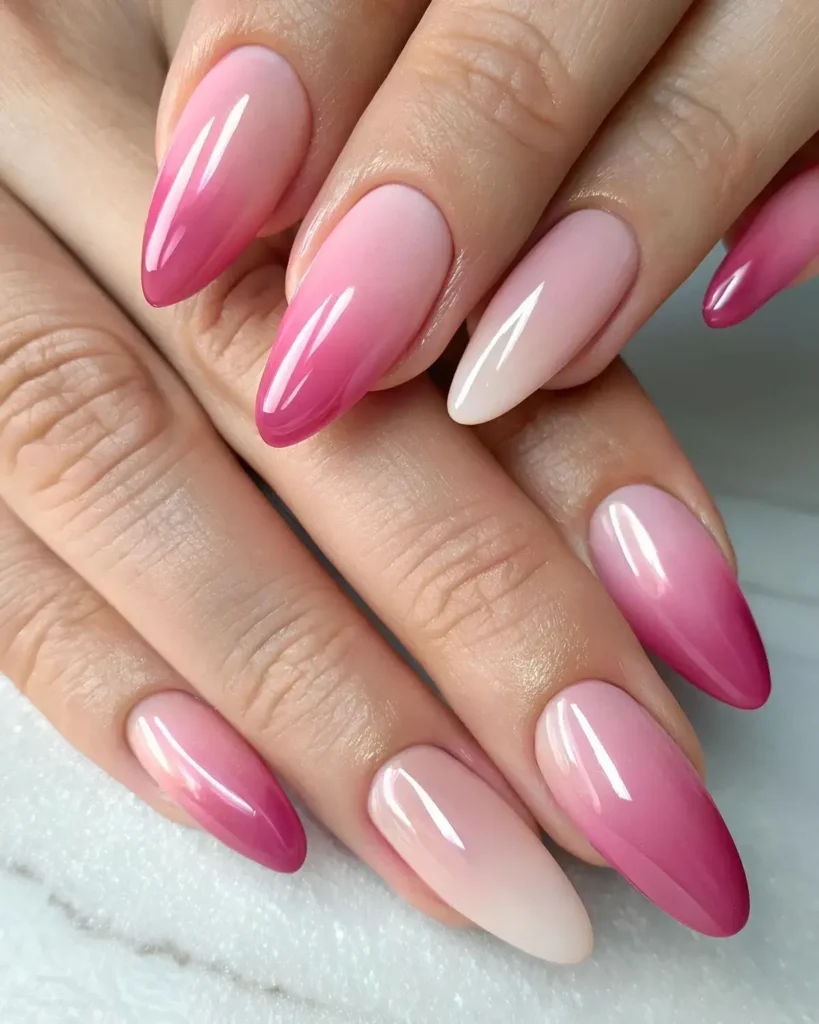
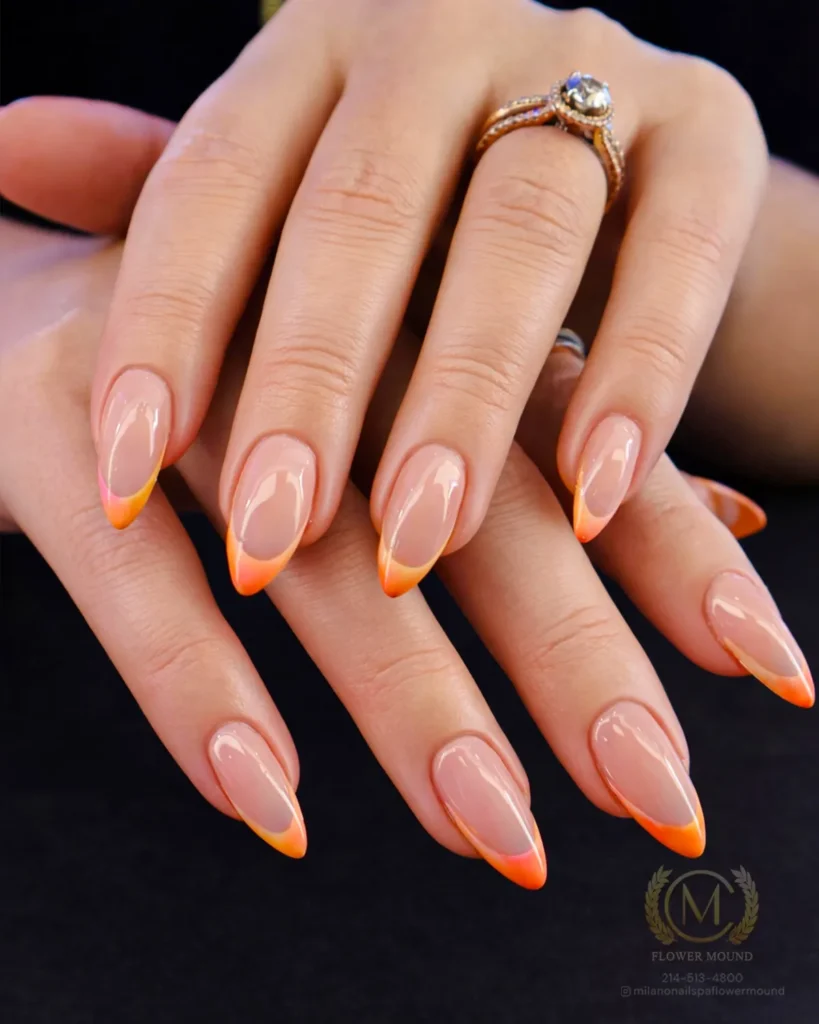
22. Sunset Orange Ombré
A warm gradient moving from yellow or peach at the base into a deeper orange or red at the tip. Reads as a summer-specific design, closer to a full color manicure with a French-inspired fade built in.
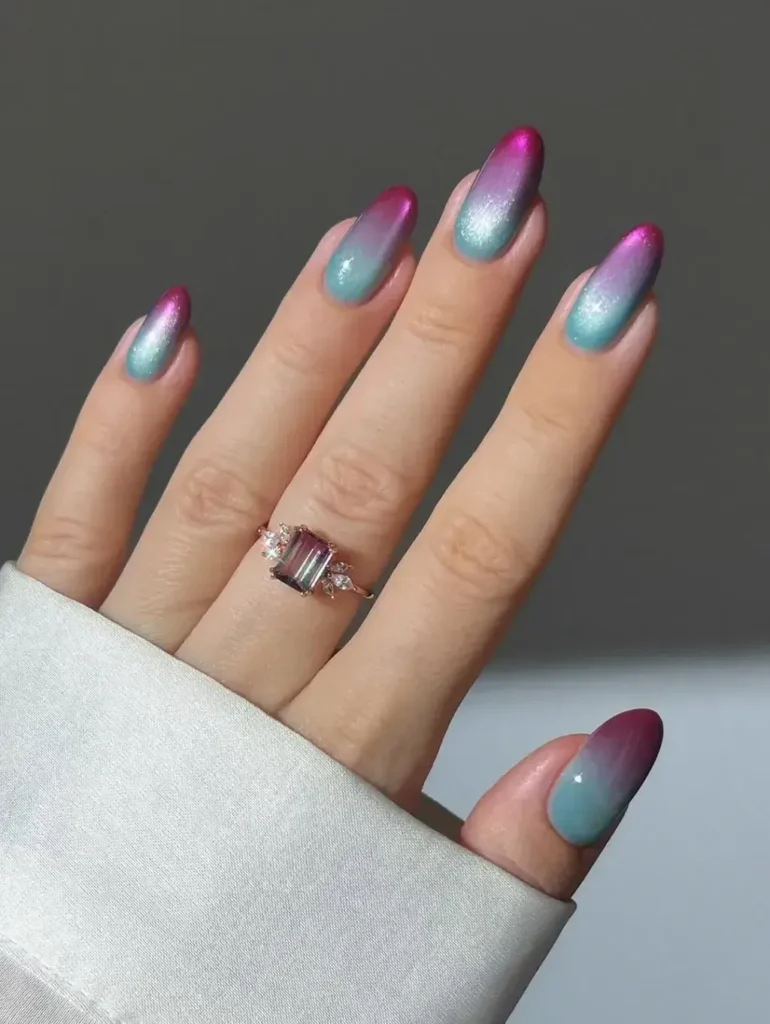
23. Turquoise and Magenta Fade
Two saturated, contrasting colors blended together rather than a color fading into white. This version leans furthest from the traditional French ombré, closer to a general color-gradient manicure that borrows the technique. If you’d rather skip the gradient altogether and go for high contrast, these black French tip nail designs offer a starker alternative to the ombré blend.
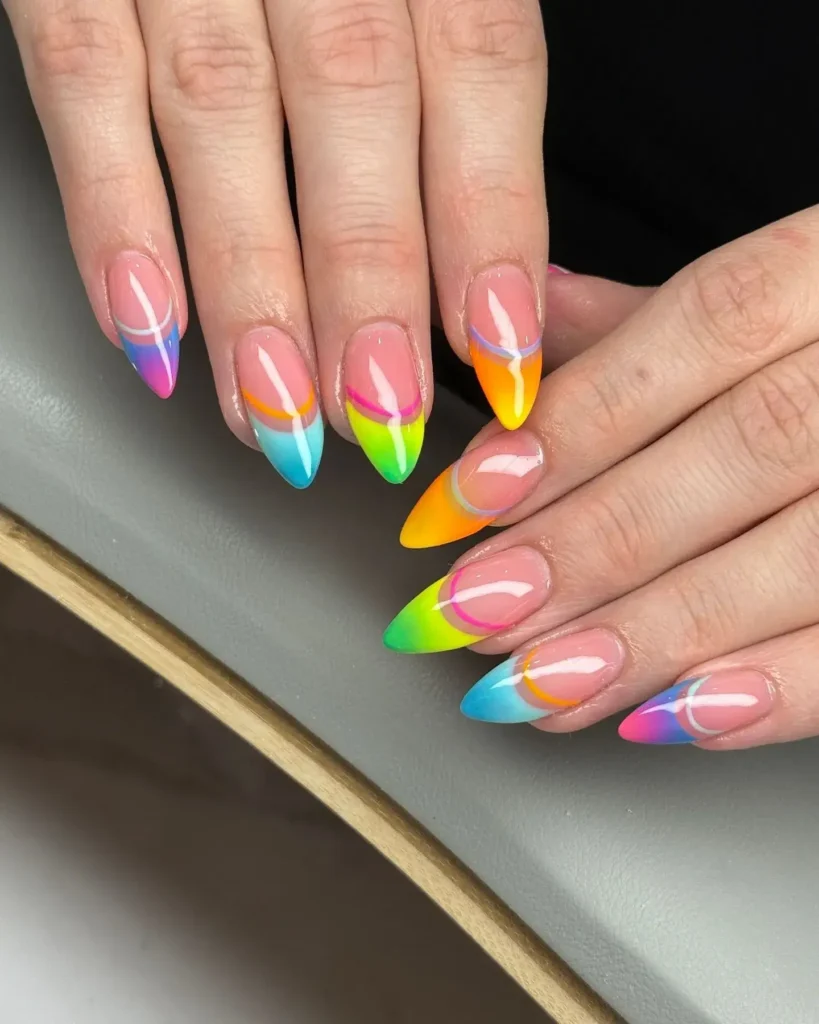
24. Rainbow Skittle French Tips
Each nail is painted in a different bright shade, still using the ombré blending technique rather than a hard line. Suits anyone who wants variety across their hands instead of committing to one color story.
How to Do French Ombré Nails: 5 Methods Compared
You can create the gradient effect with regular polish, gel, dip powder, acrylic, or an airbrush. Each method has different trade-offs for skill level, durability, and cost.
| Method | Skill Level | DIY Feasible | Durability | Best For |
| Sponge (regular polish) | Low | Yes | 5 to 7 days | Beginners |
| Gel polish | Medium | Yes | 2 to 3 weeks | Longevity |
| Dip powder | Medium | Limited | 3 to 4 weeks | Durability |
| Acrylic or BIAB | High | Difficult | 3 to 4 weeks | Structure and length |
| Airbrush | Medium to high | Requires equipment | Depends on base product | Salon consistency |
The Sponge Method (Best for Beginners)
This is the most accessible way to try French ombré at home. Paint two polish shades side by side on a makeup sponge, slightly overlapping where they meet. Dab the sponge onto the nail in light, bouncing motions rather than dragging it. Build the gradient in two to three thin layers instead of one heavy pass, letting each layer dry before adding the next.
Thin layers matter more than most tutorials mention. A single thick layer tends to look patchy rather than blended.
The Gel and Dip Powder Methods (Best for Longevity)
Gel polish follows the same sponge technique as regular polish, but each layer cures under a UV or LED lamp before the next one goes on. This gives you more control, since the gel does not dry until you cure it.
Dip powder uses a different technique. A technician taps white powder onto the tip with a dry, fluffy brush, then taps pink powder over the proximal nail, overlapping where the two meet. To avoid a visible line, the sequence is reversed on the second coat: pink is tapped first from the cuticle down, then white over the tip. This double pass is what creates a smooth blend instead of two blocks of color meeting in the middle.
Airbrush (Best for Salon-Level Consistency)
An airbrush produces the smoothest, most even gradient of any method, since the pigment is applied as a fine mist rather than dabbed or brushed on. Salons use this for consistent results across all ten nails.
If you are trying this at home, use cosmetic-grade, water-based airbrush pigment made for nails. Do not thin regular gel polish with isopropyl alcohol to spray it through an airbrush. Atomizing uncured gel this way can irritate your respiratory system and skin. This is a genuine safety issue, not just a technique preference.
Common Mistakes and How to Fix Them
Stippled or patchy texture that pulls up the base coat. This usually happens when too much polish goes on in one pass. Use a damp, not wet, sponge, apply thinner layers, and let each one dry fully. If the texture still looks uneven with gel polish, dusting a small amount of clear acrylic powder onto the uncured gel before curing can absorb the excess and smooth it out.
French tip stickers that bleed or lift. Painting directly over the edge of a sticker guide often causes polish to seep underneath. Paint away from the sticker’s edge instead of over it, and let your base color cure fully before applying the guide.
A gradient that looks unbalanced once it grows out. A common guideline is to keep the white or contrasting color to roughly one third of the nail, with the base color covering the other two thirds. A tip that is too narrow tends to look more uneven as the nail grows.
Which Nail Shape Works Best With French Ombré?
French ombré works on every nail shape, but the way you distribute the gradient should change based on the shape you have.
Almond and coffin. These shapes give you the most room to work with. The white or contrast color can extend further up the nail, and the tapered tip helps the gradient look elongated rather than blocky.
Square. Keep the contrast color concentrated closer to the tip on square nails. A wider gradient can look blunt against the straight edge, since there is no taper to soften the transition.
Oval and round. The natural curve of the nail suits a centered, gradual fade. This shape blends especially well since there are no hard corners to interrupt the gradient.
Short and natural nails. Use a lower-opacity white and start the fade closer to the free edge. Extending white too far down a short nail makes it look stunted rather than longer. This is the shape where a subtle, barely-there gradient tends to look best. For more ideas built specifically for shorter nails, see these short French tip nail designs.
If you are unsure which shape you have, a good rule of thumb: the more taper your nail has, the more gradient you can carry without it looking heavy.
Cost, Longevity, and Aftercare
Cost. A French ombré manicure typically costs more than a standard manicure, since the blending technique takes extra time. Salon prices generally run from 45 to 75 dollars depending on the method and location, with chrome or glitter add-ons costing another 10 to 20 dollars. Gel and dip versions usually cost more than regular polish because of the extra steps involved. DIY supplies cost far less, typically 15 to 30 dollars for polish, a sponge, and a top coat.
Longevity. How long the manicure lasts depends entirely on the product used, not the ombré technique itself.
| Method | Typical Wear Time |
| Regular polish | 5 to 7 days |
| Gel polish | 2 to 3 weeks |
| Dip powder | 3 to 4 weeks |
| Acrylic or BIAB | 3 to 4 weeks, with fills |
Aftercare. A few habits extend how long the manicure looks fresh, regardless of which method you used.
Apply cuticle oil daily. Ingredients like jojoba oil and vitamin E keep the surrounding skin hydrated and help prevent lifting at the edges.
Avoid picking at the polish or product, even when it starts to lift. Picking can damage the natural nail underneath, not just the manicure itself.
Use gloves for cleaning or dishwashing. Prolonged water exposure softens gel and dip product, making it more likely to lift early.
Know how your specific product should come off. Gel, dip, and acrylic are porous and dissolve in acetone soaks. Hard gel does not dissolve in acetone and has to be filed down instead. Using the wrong removal method on the wrong product can thin or damage the natural nail underneath.
The Bottom Line
French ombré nails work because the gradient hides regrowth better than a hard-line French tip, not just because it looks softer. That’s the real reason the style has outlasted plenty of trends that came and went since 2022.
If you’re trying it for the first time, start with the sponge method on a light pink to white base. It’s the most forgiving combination, and it gives you a result close to the classic look most people mean when they ask for this manicure. Once you’re comfortable with the basic technique, the color and finish variations in this guide are easy to adapt from there.
Frequently Asked Questions
Do you need long nails for French ombré nails?
No. The technique works on any length, though shorter nails need a lower-opacity color and a narrower fade to avoid looking stunted, as covered in the nail shape section above.
Can French ombré nails be filled as they grow out?
Yes, if done with gel, acrylic, or dip powder. A technician blends new product into the existing gradient rather than starting over, though this requires more skill than filling a solid color manicure since the old and new blend lines have to match.
What’s the best color for French ombré nails right now?
Milky white and soft pink remain the most requested combination. Pastel shades like lavender, sage, and baby blue are trending for a colored alternative, while chrome and glazed finishes are the most requested update to the classic look for 2026.
Is French ombré nails hard to do yourself?
It’s harder than a solid color manicure but more forgiving than sharp French tips, since small imperfections blend into the gradient instead of standing out. Most people need a few attempts before the technique feels consistent.
How do you remove French tip stickers without polish bleeding underneath?
Paint away from the sticker’s edge rather than over it, and let your base coat cure fully before applying the sticker guide. This is covered in more detail in the common mistakes section above.